



A joint academic publication · July 2026
Wealth Has Changed. Estate Planning Must Change Too.
A treatise on blockchain, Sharia succession frameworks and the inheritance of digital assets in Saudi Arabia and the GCC
Jeanina Awni, Al Mikial Law FirmDeepak Saini and Ishan Shukla, BlockWill Analytical Technologies Limited48 min read · 95 references

Abstract
A material and rapidly growing share of private wealth in Saudi Arabia and the Gulf Cooperation Council no longer takes the form of land, share certificates or bank balances. It takes the form of cryptographic control: private keys, encrypted wallets, tokenised instruments, online businesses and cloud-borne records.
This treatise examines why inheritance regimes designed for paper struggle with property that is defined by control rather than by possession; surveys the succession architecture of the Kingdom of Saudi Arabia and the United Arab Emirates, including the Sharia fara’id framework, the codifying statutes of 2022-2026 and the free-zone innovations of the DIFC and ADGM; and explains, in plain language, how well-established cryptographic primitives (SHA-256 hashing, AES-256 encryption, HMAC-SHA-256 authentication, and hardware-anchored access control) can supply the evidentiary and executional infrastructure that any inheritance regime, Sharia or civil, requires in order to operate on digital property.
Its thesis is deliberately modest and deliberately insistent: neither doctrinal law nor cryptographic engineering, acting alone, can carry a digital estate across a generation. Together, they can.
This article is a joint academic collaboration written for general awareness and education. It is not legal, financial or technical advice, and it is not an advertisement for any service. Positions of law are stated as at July 2026; readers should take professional advice on their own circumstances.
Introduction: The Quiet Crisis in Digital Wealth Transfer
The twenty-first century will host the largest intergenerational transfer of wealth in recorded history. Current projections place the global figure at approximately USD 124 trillion through 2048, revised upward from USD 84 trillion only two years earlier.1 Within the Gulf, roughly USD 1 trillion is expected to change generational hands by 2030 alone.2 These are not abstractions. They are houses, businesses, portfolios, and, increasingly, assets that exist only as entries on distributed ledgers, reachable only by whoever controls a private key.
The Gulf is not a spectator to this shift; it is among its principal theatres. Roughly a quarter of the United Arab Emirates’ population is estimated to hold cryptoassets, the highest penetration rate recorded anywhere,3 and UAE addresses received more than USD 53 billion of on-chain value in the year to June 2025, making the Emirates the second-largest crypto economy in the Middle East and North Africa.4 Saudi Arabia, meanwhile, is the region’s fastest-growing crypto economy in the most recent full measurement cycle, expanding at approximately 154 per cent year on year.5
Scale of the transfer
- Global intergenerational transfer through 2048
- USD 124 trillion
- Same projection two years earlier
- USD 84 trillion
- Gulf wealth changing hands by 2030
- USD 1 trillion
Against this accumulation stands an uncomfortable arithmetic. Roughly one bitcoin in five is believed to sit in wallets that are lost or stranded, a figure estimated at some USD 140 billion as long ago as January 2021, much of it following the death or incapacity of the person who alone could reach it.6 Digital assets are unique among classes of property in a single, decisive respect: the loss of access is frequently indistinguishable from the loss of ownership. Classical inheritance law presumes that an estate’s components can be located, identified and authenticated by an executor or by the heirs. Digital estates invert the presumption. The asset exists; the heir cannot reach it.
This treatise proceeds in six parts, following the plan of a joint collaboration between a law firm and a technology team, deliberately so, because its central claim is that the problem is jointly legal and technical, and that neither discipline can solve it alone. Section 1 maps how digital wealth has changed the rules of ownership.
Section 2 explains why traditional estate planning fails digital assets, with cautionary illustrations.
Section 3 surveys the evolving legal landscape of Saudi Arabia and the UAE (the Sharia succession framework, the codifying statutes enacted between 2022 and 2026, and the free-zone innovations) in the detail it deserves.
Section 4 explains, without assuming any technical background, how cryptography can serve rather than subvert the law of inheritance.
Section 5 assembles a practical framework. Section 6 looks forward.

Section 1Digital Wealth Has Changed the Rules

1.1 The rapid growth of digital assets
It is useful to begin with an inventory of what, precisely, the modern estate contains. An estimated 741 million people worldwide now hold crypto assets of some description.7 The category is far broader than bitcoin, though bitcoin, conceived in 2008 as ‘an electronic payment system based on cryptographic proof instead of trust’,8 remains its emblem. A representative private balance sheet in Riyadh, Jeddah, Dubai or Abu Dhabi may today include some or all of the following.
Cryptocurrencies and stablecoins.
Bitcoin, Ether and their peers; and fiat-referenced tokens increasingly used for settlement and remittance across the Gulf’s trading corridors. These may be held on regulated exchanges (custodial holdings, where a company controls the keys) or in self-custody (where the owner alone holds them).
Tokenised traditional assets.
The Gulf has moved early here: the Dubai Land Department began tokenising real-estate title in a regulated pilot in May 2025, adding a licensed secondary market in February 2026,9 and Saudi policy discussion now contemplates tokenised instruments within the capital markets. A ‘share of an apartment’ that exists as a token inherits the succession problems of crypto, not of land.
Online businesses and platform assets.
E-commerce storefronts, software subscriptions and their revenue streams, domain names, monetised social-media and creator accounts, loyalty balances and in-game assets. Many are governed by terms of service that purport to extinguish or restrict transfer on death.
Digital intellectual property.
Manuscripts, designs, code repositories, media libraries and non-fungible tokens. NFTs deserve a precision the market often skips: as one of the present authors has observed, the purchaser of an NFT frequently ‘only owns a unique hash on the blockchain’, the token, not necessarily the underlying work or its copyright.10 What passes to the heirs is exactly what the deceased owned, no more; establishing what that was is a legal exercise.
Cloud-based financial records.
Statements, invoices, tax records, password managers and the correspondence through which the rest of the estate can be discovered at all. These are rarely valuable in themselves; they are the map to everything that is.
1.2 Property, but not as the law knew it
For most of legal history, personal property divided neatly into things one could possess (a watch, a horse) and claims one could enforce against another (a debt, a share). Crypto assets fit neither box: no one ‘possesses’ an entry on ten thousand synchronized ledgers, and there is no counterparty against whom a bitcoin is a claim. The common-law world resolved the puzzle by recognising a third category of personal property, first in scholarship and case law, then in the Law Commission of England and Wales’ 2023 report,11 and finally in statute: the UK’s Property (Digital Assets) Act 2025 provides that a thing is not prevented from being an object of property rights merely because it is neither a thing in possession nor a thing in action.12

The Gulf, notably, legislated first. The Dubai International Financial Centre’s Digital Assets Law of 2024 defines the digital asset with careful technical accuracy and declares it intangible property that is ‘neither a thing in possession nor a thing in action’,13 a characterization its Court of Appeal had already embraced.14 At the international level, the UNIDROIT Principles organise the entire private law of digital assets around control, the factual, exclusive ability to use, benefit from and transfer the asset, as the functional heir of possession.15 And in the Kingdom of Saudi Arabia, the new Civil Transactions Law defines property (mal) in deliberately capacious terms, anything, material or immaterial, of recognised value in dealings, terms comfortably wide enough to embrace digital assets even though the statute never names them.16
The doctrinal consensus, in short, has arrived: digital property is property. What has not arrived is the operational machinery for passing it between generations. That distinction, between the status of an asset and the transmissibility of an asset, is the hinge on which this entire treatise turns.
1.3 Why wealth is increasingly borderless and digital
A paper share certificate is somewhere. A land title is somewhere. A bitcoin is, in a meaningful sense, everywhere and nowhere: the ledger recording it is replicated across nodes on every continent, while the power to move it is condensed into a secret that can live in a safe in Riyadh, a memory in Dubai, or a hardware device in a drawer in London. As the investor Adam Draper has put it, ‘the blockchain does one thing: it replaces third-party trust with mathematical proof that something happened.’17 The register needs no registrar; the transfer needs no transfer agent.
This is why digital wealth is borderless in a way that even offshore banking never was. The asset does not reside in a jurisdiction; only its owner does, and owners are mortal, mobile and, across the GCC’s expatriate-rich societies, very often domiciled in one state, resident in a second, with heirs in a third. Technologies dismissed a decade ago as playthings, and it is worth remembering the venture aphorism that ‘the next big thing will start out looking like a toy’,18 now hold family-defining wealth. The rules of ownership have changed. The rules of inheritance, as the next section shows, have not yet caught up.
Section 2Why Traditional Estate Planning Is No Longer Enough
2.1 Loss of access versus loss of ownership
Begin with the distinction that organizes everything else in this treatise. When the holder of a bank account dies, the bank still knows the balance, the law still knows the heirs, and the two can be connected by court order. Ownership and access are separable, and the legal system specializes in reuniting them. When the holder of a self-custodied wallet dies, ownership passes to the heirs by operation of law at the instant of death, under the fara’id automatically, under a will upon probate, but access passes to no one. The keys are not ‘in the estate’ in any practical sense; they are wherever the deceased left them, encrypted by whatever the deceased alone remembered. As one practitioner has put it with admirable bluntness: ‘If you pass away and there is no one else that knows your private keys, your assets are lost.’19
The scale of the resulting attrition is contested in its details but not in its magnitude: conservative recent work counts on the order of 1.57 million bitcoin permanently lost through self-custody failures alone, with figures beyond three million on wider definitions.20 Practitioner experience corroborates the pattern from the other side of the desk: in a global survey of trust and estate professionals, over ninety per cent expected client demand for digital-asset advice to grow, and nearly a quarter had already encountered families unable to reach a deceased or incapacitated relative’s digital assets.21
2.2 Six ways the conventional will fails a digital estate
None of the above is an argument against wills. It is an argument that the will, as conventionally drafted and administered, assumes facts about property that digital assets do not supply. Six failure points recur.
First, the disclosure paradox. A will that lists private keys or seed phrases converts a testamentary instrument into a treasure map. Probate files may be accessed by parties beyond the family; drafts pass through assistants, printers and inboxes. Security best practice says never write the secret down where others will read it; testamentary practice says write everything down so others can read it. Unreconciled, these two imperatives produce wills that are either dangerous or useless.
Second, the discovery problem. An executor’s first statutory duty is to gather in the estate,27 which presupposes the estate can be found. Self-custodied assets emit no statements, no counterfoils, no registered addresses. Executors in Riyadh, Abu Dhabi and Dubai routinely cannot determine whether the deceased held cryptoassets at all, let alone where.
Third, formality rules. The instinct to solve a digital problem with a digital will meets an inconvenient rule: in the region’s common-law free zones, wills are among the few instruments expressly excluded from electronic-form validity, article 8 of the DIFC Electronic Transactions Law and Section 25 of the ADGM Electronic Transactions Regulations both carve out wills, codicils and testamentary trusts.28 The instrument that governs the most digital of assets must itself, in general, satisfy decidedly analogue formalities.
Fourth, the tempo mismatch. Probate and succession-certificate procedures run on months, an average of roughly twenty months in one large US study, with 9 to 18 months commonplace elsewhere,29 while crypto asset markets reprice by the second and reward phishing, coercion and haste. An estate frozen in procedure is an estate exposed to volatility and to attack for its entire administration.
Fifth, the intermediary patchwork. Custodial platforms each improvise their own bereavement process, one leading exchange’s ‘inheritance appeal’ requires certified death and kinship documents and takes one to two months,30 while the most developed statutory answer, the American RUFADAA with its three-tier hierarchy of online tools, estate instruments and terms of service, has no GCC analogue yet.31 The result: outcomes for identical assets differ by platform, by jurisdiction and by the diligence of whichever support agent opens the ticket.
Sixth, the two failure modes. Every mechanism for passing secrets to heirs must steer between opposite disasters: reveal too little, too late, and the asset strands (failure mode 1); reveal too much, too early, and the asset is taken, by a rogue insider, a compromised device or an impatient relative, in a transaction that, on-chain, can never be reversed (failure mode 2). Paper instruments are structurally poor at threading this needle, because paper cannot verify events, conditions or identities. Figure 1 states the planning objective that any adequate solution must satisfy.
Private keys and credentials
the only means of control
Failure mode 1: stranding
Keys never reach the heirs: the asset survives, unreachable, forever
Failure mode 2: breach
Keys reach the wrong hands too early: the asset moves and cannot be recalled
The planning objective: exactly one authorised transfer, to exactly the right people, at exactly the right moment
The conclusion is not that estate planning is obsolete; it is that estate planning has acquired an engineering dimension. The legal instrument remains sovereign, it alone can name heirs, satisfy the fara’id, appoint guardians and bind courts. But between the instrument and the asset now stands a layer of cryptographic machinery, and unless the plan speaks to that layer, the plan is a letter addressed to a door with no keyhole. Proactive digital estate planning, in other words, is not a luxury purchase for the technophile wealthy; it is the minimum condition on which this asset class can be inherited at all.
Section 3The Evolving Legal Landscape in the GCC
3.1 Saudi Arabia’s Vision 2030 and the regulatory direction of travel
Saudi Arabia’s transformation programme, Vision 2030, made digitalization a matter of state strategy rather than private enthusiasm,32 and the Kingdom’s legal infrastructure has followed with remarkable speed: a codified Personal Status Law (2022), a modernized Law of Evidence (2022), a comprehensive data-protection regime (2021-2024) and, most consequentially, the Kingdom’s first codified civil code (2023). The judiciary digitized alongside: the Ministry of Justice’s Najiz platform now issues inheritance certificates with the heirs’ shares computed automatically, and its virtual notary processed over 1.4 million transactions in 2024 alone,33 a detail worth pausing on, because a judiciary that already computes fara’id shares by algorithm has, in a quiet way, conceded the premise of this treatise.
On virtual assets specifically, the Kingdom’s posture has evolved by measured steps. A 2018 inter-agency warning placed virtual-currency dealing outside the licensed perimeter, barring financial institutions while stopping short of criminalizing individual holding.34 Yet the same central bank co-authored Project Aber with the UAE, concluding in 2020 that distributed ledgers were viable for cross-border interbank settlement,35 and joined the multilateral mBridge experiment as a full participant in June 2024.36 By late 2025, ministers were publicly confirming design work on riyal-pegged stablecoins under joint SAMA and CMA oversight, though no comprehensive virtual-asset statute had been enacted as at mid-2026.37
One of the present authors has chronicled this arc in real time, asking in October 2023 whether the Kingdom would ever approve blockchain regulation,38 and answering by January 2024 that the trajectory ran ‘from warnings to Sharia compliance’: toward a framework in which virtual assets are rendered compatible with the Kingdom’s legal order through careful structuring and scholarly endorsement rather than excluded from it.39 The practitioner’s intuition captured there is essential to everything that follows: the regulatory direction of travel is settled, but regulation is arriving upstream, at issuance, custody and transfer, while inheritance sits downstream, where the regulatory light is dimmer and the stakes, measured in grief as much as in riyals or dirhams, are highest.
Regulatory direction of travel
2018
Virtual-currency warning
Outside the licensed perimeter
2020
Project Aber
DLT viable for cross-border settlement
2022
Personal Status Law
Law of Evidence
2023
First codified civil code
Property defined in capacious terms
2024
mBridge participation
1.4M virtual-notary transactions
2025
Riyal-pegged stablecoins
Under SAMA and CMA design work
3.2 The Saudi legal framework: Sharia, statute and digital evidence
Saudi succession law begins from a constitutional premise that differs fundamentally from jurisdictions based on testamentary freedom. Under the Basic Law of Governance, the Qur’an and the Sunnah constitute the Kingdom’s constitution and the supreme source of legislation.40
While private property is expressly protected, inheritance is governed by the mandatory rules of fara’id rather than unrestricted testamentary discretion. Accordingly, a wasiyya may generally dispose of no more than one-third of the net estate, while any bequest exceeding that limit or made in favour of a legal heir requires the consent of the remaining heirs after the testator’s death.41
These principles, historically applied through classical Islamic jurisprudence, are now substantially codified in the Personal Status Law of 2022. The Law defines the estate (al-tarika), regulates testamentary dispositions, and preserves the most preponderant opinions of Islamic jurisprudence as the residual source where the statute is silent.42 Once a digital asset qualifies as mal, property possessing recognised economic value, it forms part of the deceased’s estate and is distributed according to the ordinary rules of succession, subject to any valid wasiyya. Saudi law therefore requires no separate category of ‘digital inheritance’; the legal question is whether the asset constitutes inheritable property.
Three additional statutes become particularly significant for digital estates. First, the Civil Transactions Law adopts a broad conception of property rights that is capable of accommodating cryptocurrencies, tokenized assets and other forms of digital property, provided they satisfy the requirements of lawful proprietary interests under Saudi law.43
Secondly, the Law of Evidence of 2022 establishes a comprehensive framework for digital evidence by recognising the admissibility of electronic records, documents and signatures, while granting qualifying electronic evidence the evidentiary value of official documents and presuming the authenticity of records generated through recognised electronic platforms unless rebutted.44
Finally, the Personal Data Protection Law regulates the processing and cross-border transfer of personal data, creating an important legal framework for the storage, transmission and recovery of encrypted credentials and wallet-access information.45
3.2A Discovery of estate assets in the digital era
The rules of succession can only be applied once the assets forming the estate have been identified. Traditionally, heirs or court-appointed representatives were required to contact individual banks to determine whether the deceased held accounts, deposits, or other financial assets. The process was often slow and depended on the family’s knowledge of the deceased’s financial affairs.
Saudi Arabia has significantly improved this process through digital public services. The Saudi Central Bank (SAMA) provides an electronic service that allows legally authorised heirs and estate representatives, after submitting the required judicial and identification documents, to request information about a deceased person’s banking relationships with supervised financial institutions.46 Rather than requiring separate requests to individual banks, the service enables estate assets to be identified through a single regulated process.
This development is important because succession depends not only on legal rules but also on the ability to locate and verify the assets that form part of the estate. By simplifying the identification of financial assets, the system supports more efficient estate administration and assists courts in implementing the rules of inheritance.
As personal wealth increasingly includes digital wallets, cryptocurrencies, tokenised assets and fintech platforms, the same principle will become more important. The challenge is no longer whether these assets can be inherited, but whether they can be located, verified and transferred to the rightful heirs. Future digital estate administration will therefore require similar mechanisms for identifying digital assets while maintaining appropriate safeguards for privacy, cybersecurity and the integrity of digital evidence.

3.3 The Sharia succession framework, a primer for the non-specialist
Because this treatise addresses readers from both legal and technical backgrounds, the framework deserves a plain statement. Islamic inheritance law is often described as the most mathematically precise succession system ever devised, the classical jurists called its study ‘ilm al-fara’id, the science of the ordained shares, and its operation on an estate follows a strict waterfall, illustrated in Figure 2.
The estate (al-tarika)
everything the deceased owned
1 · Funeral and burial expenses
paid first, before all else
2 · Debts of the deceased
including religious obligations, e.g. unpaid zakat
3 · Bequests (wasiyya)
capped at one-third of what remains; none to an heir without the other heirs’ consent
4 · Fixed shares (fara'id)
Qur’anic sharers, then residuaries: the mandatory distribution set by Qur’an 4:11, 4:12 and 4:176
From the estate are paid, in order: funeral and burial expenses; the debts of the deceased, including religious obligations such as unpaid zakat; then any bequests (wasiyya), which the Prophet (peace be upon him) capped at one-third of the estate in the celebrated hadith of Sa‘d ibn Abi Waqqas, ‘one-third, and one-third is much’,47 and which may not benefit an existing heir save with the other heirs’ consent (la wasiyya li-warith).48 Only then does the residue distribute according to the fixed shares ordained in the Qur’an itself: the sharers (ashab al-furud), spouses, parents, daughters and others with stipulated fractions, take first; agnatic residuaries (‘asaba) take what remains, sons and daughters together in the ratio of two to one; and distant kindred (dhawu al-arham) inherit only in their absence.49 Where the fractions over- or under-subscribe the estate, the doctrines of ‘awl and radd scale the shares proportionally, a system of rational arithmetic adjustment centuries older than any probate code.50
Within this mandatory structure, classical law supplies genuine planning instruments. A lifetime gift (hiba) transfers property outside the estate altogether, provided delivery (qabd) is completed before death.51 An endowment (waqf) dedicates property to beneficiaries or charity in perpetuity, removing it from the fara’id while honouring family purposes, an institution the UAE has modernised by federal statute.52 And takharuj permits heirs to renegotiate the distribution among themselves for consideration, the classical ancestor of the modern deed of family arrangement.53 The system is mandatory at its core and flexible at its edges; competent planning uses the edges.
Two observations connect this framework to digital assets. The first is doctrinal: is a cryptoasset mal (recognised, valuable property) in the Sharia sense at all? The fatwa landscape genuinely divides. Egypt’s Dar al-Ifta held bitcoin dealing impermissible in 2017, citing excessive uncertainty (gharar) and the absence of state guarantee;54 the Turkish Diyanet reached a similar conclusion the same year;55 while a widely circulated 2018 analysis concluded bitcoin is mal and customary money (‘urf), permissible where local law allows,56 and a Bahraini Sharia board certified an entire protocol by analogy from AAOIFI standards.57 The OIC’s International Islamic Fiqh Academy, seized of the question in 2019, deliberately declined a definitive ruling and called for further study.58 For succession purposes the practical position in the Kingdom is captured less by any single fatwa than by the direction of travel described in Section 3.1: structured assimilation, not rejection.
The second observation is arithmetical, and it is one of the quiet ironies of this field: digital assets are the most fara’id- compatible property ever created. Land resists division into twenty-fourths; a bitcoin divides to eight decimal places, an ether to eighteen. The fractional shares that generations of jurists administered through valuation, sale and substitution can be executed on-chain exactly, to the smallest unit, with no forced liquidation. Table 1 works a concrete example.
| Heir | Share under the fara'id | Of 40 ETH distributable | Basis |
|---|---|---|---|
| Widow | 1/8 (one-eighth) | 5.000 ETH | Qur'an 4:12: fixed sharer, deceased leaving children |
| Son A | 2 residuary parts of 5 | 14.000 ETH | 'asaba: residue of 35 ETH in the ratio 2:2:1 |
| Son B | 2 residuary parts of 5 | 14.000 ETH | 'asaba: residue of 35 ETH in the ratio 2:2:1 |
| Daughter | 1 residuary part of 5 | 7.000 ETH | Qur'an 4:11: 'to the male, the like of the portion of two females' |
3.4 The United Arab Emirates: one federation, several succession regimes
The UAE presents the region’s most intricate, and most instructive, architecture, because it operates several succession regimes in parallel. For Muslims, the new federal Personal Status Law (in force April 2025) preserves the fara’id and wasiyya framework, adds express validity for bequests between persons of different religions, and, strikingly, for present purposes, criminalises the concealment or misappropriation of estate assets:59 a provision with obvious bite where an estate’s most concealable assets are twelve words of seed phrase. For non-Muslims, the Civil Personal Status Law of 2022 offers a parallel secular track: full testamentary freedom, gender-equal intestacy, and the option for a foreigner’s heirs to invoke the law of the home state.60 Beneath both sits the conflict-of-laws rule that succession follows the deceased’s nationality, subject to UAE law for local real property, a rule carried from the 1985 Civil Code into its 2025 successor, which adds that the UAE-situated financial assets of an heirless foreigner devolve to charitable endowment.61,62
Where, in that scheme, is a crypto asset ‘situated’? The honest answer is that the question is category-strained: a ledger entry replicated worldwide has no situs in the 1985 sense, and the practical anchor becomes either the custodian (for exchange-held assets) or the location of effective control (for self-custody). The federal Evidence Law at least ensures that, wherever the argument is had, cryptographically verifiable records will be heard: electronic documents and signatures carry the weight of their paper equivalents where origin and integrity can be verified.63
3.5 The free zones and the regulators: the world’s densest laboratory
Onto the federal base, Dubai and Abu Dhabi have layered the most advanced digital-asset private law anywhere. The DIFC’s Digital Assets Law (Section 1.2) was accompanied by an amendment law extending ‘property’ under the Centre’s trust, foundations and obligations statutes to digital assets,64 so a DIFC foundation, an entity whose assets sit outside the founder’s personal estate and therefore outside probate, can now hold them natively.65 On the testamentary side, Dubai’s non-Muslim wills regime66 acquired in October 2024 a dedicated Digital Assets Will: the testator allocates specified tokens to beneficiaries through a DIFC Courts non-custodial wallet, remotely and in life.67 And a 2025 Dubai law armed the DIFC Courts’ enforcement judge with jurisdiction over registered wills wherever the assets sit, inside or outside the Centre, with finality against merits review.68
These are substantial achievements. They are also, and the point is made in a spirit of scholarly candour, not criticism, narrow apertures. The Digital Assets Will currently supports a closed list of six tokens; NFTs, DeFi positions, liquidity-pool receipts, tokenized real-world assets and governance rights remain outside it; and the instrument is available principally to non-Muslim testators over 21. For the Muslim majority of the region’s population, and for the long tail of asset types, the fara’id framework and the general instruments (foundations, waqf, hiba, carefully drafted wasiyya) remain the operative law.
Abu Dhabi supplies the common-law counterpart: ADGM, applying English law directly, regulated virtual assets as early as 2018,69 added the world’s first DLT Foundations regime in 2023,70 and sits alongside a fully electronic judicial wills registry for non-Muslims.71 On the regulatory perimeter, Dubai’s VARA licenses and supervises virtual-asset activity emirate-wide, custody rules included, though, tellingly, its rulebooks contain no succession-specific provision for the assets of deceased users; the gap is regulatory fact, not oversight of this treatise.72 The federal centre has now moved as well: the 2025 Central Bank law pulls virtual-asset payment services and DLT-based activity into the licensing perimeter, with a transition period expiring in September 2026 and penalties reaching AED 1 billion,73 atop a 2024 regulation requiring dirham payment tokens to be fully reserve-backed.74 Even the courts have begun to speak: in 2024, the Dubai Court of First Instance ordered salary arrears paid partly in crypto asset, in kind,75 recognition, if any were needed, that these instruments are value the legal system can order delivered.
3.6 The pattern, and the gap it leaves
Step back and a single pattern emerges across the Gulf and beyond. Legislators worldwide have answered the status question: the UK by statute, the EU by comprehensive market regulation that nonetheless leaves succession to national law,76 the DIFC by both statute and precedent, Saudi Arabia by a civil code wide enough not to need to ask. Regulators have answered the conduct question: licensing, custody, disclosure, reserves. What no GCC instrument yet answers systematically is the transmission question: how control of a cryptographic asset passes, provably and lawfully, from the dead to the living. Four operational problems recur in every jurisdiction surveyed: asset discovery (does the estate exist?); intent authentication (is this instruction genuinely the deceased person’s?); conditional execution (release only upon death established, majority attained, debts discharged in fara’id priority); and cross-border verifiability (a private key is meaningful in Riyadh, Dubai and Singapore simultaneously; a certified paper will is not). These four problems are the specification for Section 4.
The stakes of leaving them unsolved are not abstract. Fewer than one in five Gulf family businesses has a comprehensive succession plan of any kind;77 the region’s wealth is disproportionately first-generation, its holders disproportionately young, and its digital allocation disproportionately high. For these families, legacy is not merely a portfolio decision but an ethical and religious obligation, and the mismatch between that obligation and the present state of digital-asset infrastructure is among the most consequential private-client questions the region will confront in the coming decade.
Section 4Where Technology Meets Law
4.1 Why technology is constitutive, not decorative
Section 3 closed with four operational problems (discovery, intent authentication, conditional execution, cross-border verifiability) that recur in every jurisdiction surveyed. Notice what they have in common: none of them is a question about who should inherit. The fara’id answer that question with fourteen centuries of precision; the DIFC will answers it with common-law clarity. All four are questions about proof and execution, and proof and execution are precisely what cryptography does. Lawrence Lessig’s famous provocation that ‘code is law’78 is often read as a warning that software displaces legislators. In the succession context it is better read in reverse: code is how the law’s answer gets carried out on assets that only code can move. Properly characterized, blockchain infrastructure is not a competitor to legal process; it is a substrate for it.
What follows explains the machinery in plain language. Three cryptographic primitives, each a published, decades-old international standard, not proprietary magic, do nearly all of the work. The reader who has never encountered them will, in the next few pages, understand digital succession infrastructure better than most of the market that sells it.
4.2 Three primitives, three analogies
The fingerprint: SHA-256. A cryptographic hash function takes any document (a will, a wasiyya, an inventory of wallets) and produces a fixed 64-character string called a digest: a digital fingerprint.79 Two properties make it remarkable. It is one-way: the fingerprint reveals nothing about the document, just as a human fingerprint reveals nothing about a face. And it is avalanche-sensitive: change anything in the document, even a single full stop, and the fingerprint changes beyond recognition. Table 2 demonstrates with a real computation.
| Input sentence | SHA-256 digest (computed) |
|---|---|
| ‘I bequeath my ether to my eldest daughter.’ | 38e29f7ac94ee4c7c0a65dbd0bee2bda6e0f2df89290d391c3eb80a9dd8248c0 |
| ‘I bequeath my ether to my eldest daughter’, identical but for the final full stop | 15ae1a03baf2220f8839a6752441b40f13e370e874fa91ec0d4c6a45f4f7641d |
The legal significance is immediate. Hash a succession instrument at the moment it is made; record the digest, not the document, on a public ledger, which timestamps it immutably. Years later, when a Saudi or UAE court asks whether the paper produced from a drawer is genuinely the instrument the deceased made, and unaltered, the answer is arithmetic: re-hash and compare (Figure 3). The content was never disclosed; the confidentiality that Section 2’s ‘disclosure paradox’ demanded is preserved; and the artefact lands squarely within both evidence statutes: the UAE’s, which gives verified electronic records the weight of paper,80 and the Kingdom’s, which presumes the validity of records produced through documented platforms and puts the burden on the challenger.81 This is the cryptographic intent layer: it does not say what the document means (that remains with the judge’s office); it proves what the document was, and when.

Succession instrument
will, wasiyya, instruction letter
SHA-256
64-character digest
a ‘digital fingerprint’ that reveals nothing of the content
Digest recorded on a ledger
with an independent timestamp
Years later: re-hash the produced document
Same digest means same document, unaltered, since that date
The chain proves integrity and date. It does not disclose, and does not need to disclose, what the document says.
The vault: AES-256. Encryption is the locked box. The Advanced Encryption Standard with 256-bit keys, adopted by the US government in 2001 and used worldwide for the most sensitive material,82 converts the estate’s genuinely secret content (seed phrases, key files, access instructions, the will’s operative schedules) into ciphertext that is, on any realistic assessment, unopenable without the decryption key. The consequence for succession architecture is profound: a custodian holding only ciphertext holds a locked box, not the treasure. It cannot be tempted by what it cannot read; a breach of its servers yields gibberish; and, returning to Section 3.2, data-protection analysis under the Saudi PDPL and its UAE counterparts becomes tractable, because what crosses borders or sits on servers is not the naked secret but an encrypted artefact.83
The tamper-evident seal: HMAC-SHA-256. A hash proves a document is unaltered; but who sent the instruction? A keyed-hash message authentication code binds a message to a secret key shared with the rightful party, producing a seal that only that party could have produced and any tampering visibly breaks.84 In succession infrastructure, HMACs authenticate every instruction that moves through the system (the owner’s updates to the vault, the trigger notices, the release commands), so that the record a court later examines is not merely a log but an authenticated log: each entry attributable, each entry intact.
4.3 Holding the keys to the keys: hardware, possession and knowledge
Encryption relocates the problem, sceptics will note, rather than eliminating it: the estate’s secrets now live in a vault, and the vault has a key. Where does that key live? In serious architectures, inside a hardware security module: a tamper-resistant physical device, validated against the international FIPS 140-3 standard, whose defining property is that keys generated inside it never leave it; the module performs cryptographic operations on request and destroys its contents if physically attacked.85 Access to the module’s operations is then bound not to a password (passwords are what Section 2’s case studies are made of) but to a hardware security key under the FIDO2/WebAuthn open standards:86 a physical token, such as a YubiKey, which must be both physically present and unlocked by a PIN. The formula is the oldest in security, older than cryptography itself: something you have and something you know, the bank vault that opens only to the person holding the physical key who also knows the code. Possession alone (a stolen token) fails; knowledge alone (a leaked PIN) fails; only the entitled person, holding and knowing, succeeds.
A note on architectural variety, in the interest of precision. A well-known alternative approach splits a secret into fragments distributed among multiple parties, a technique descending from Shamir’s celebrated 1979 paper;87 multi-party computation systems pursue related ends. The architecture described in this treatise, as implemented, for example, in BlockWill’s production infrastructure, takes a different route: it does not shard or split secrets at all. It rests on the layered composition just described (SHA-256 anchored intent, AES-256 encrypted custody, HMAC-SHA-256 authenticated instructions), with access grounded in a hardware security module and released only to the holder of the registered hardware key and its PIN. The design philosophies differ; what matters for the reader is that both are engineering answers to the same legal question (how is exactly one authorised transfer, to exactly the right people, at exactly the right moment, guaranteed?), and that any candidate infrastructure should be interrogated on exactly that question.
4.4 The delivery layer: executing the legal answer
The final layer converts the conditional transfers that estate planners have always drafted on paper into executable protocol. Classical succession is saturated with conditions: distribution follows the discharge of debts in fara’id priority; a widow’s remarriage awaits the ‘iddah; a minor’s share awaits majority or a guardian’s supervision; a waqf’s income follows its charter; a DIFC probate grant precedes the executor’s title to act. Paper executes conditions poorly, someone must notice the condition, verify it, and act. A programmable delivery layer (colloquially, a dead-man’s switch, though serious implementations are considerably more ceremonious) executes them natively: prolonged verified inactivity initiates a challenge protocol; a death is established by certificate hash, court order or probate grant; and only then, stage by stage, is access released to the persons the legal instrument names, in the shares the law commands.88
- 1
Intent layer
SHA-256 hash anchoring: what did the owner instruct, and when?
Legal hook: evidence law (KSA Evidence Law arts 55-62; UAE Evidence Law arts 53-64)
- 2
Custody layer
AES-256 encrypted vault: credentials and instructions held only as ciphertext
Legal hook: data-protection law (KSA PDPL; DIFC and ADGM data protection laws)
- 3
Integrity layer
HMAC-SHA-256: is each instruction authentic and unaltered?
Legal hook: authentication of records and instructions before a court
- 4
Access layer
Hardware security module + hardware security key (e.g. YubiKey) + PIN: who may open it?
Legal hook: access bound to the person entitled, possession plus knowledge
- 5
Delivery layer
Conditional release on verified triggers: when, and to whom, may it open?
Legal hook: death certificate · probate or court order · fara'id shares · guardianship milestones
Each layer answers a question a court will ask. None of them answers the legal question itself: the law decides; the layers execute.
Two honest cautions belong in any treatise that recommends this machinery. The first is the oracle problem: code cannot itself perceive death; it can only verify artefacts, certificates, orders, attestations, that humans and institutions produce. The quality of a delivery layer is therefore exactly the quality of its verification ceremony, and well-designed systems keep human and judicial checkpoints precisely where the law puts them. The second is automation bias. As De Filippi and Wright observe, ‘we already tend to place more trust in computer-generated recommendation systems than in other sources of information, a phenomenon known as automation bias’;89 their larger thesis, that the rule of code can drift from the rule of law, is a warning this field must take seriously. The architecture commended here is deliberately subordinate: as Figure 4’s scheme has it, the law decides; the layers execute. Kevin Werbach’s framing is the right one: blockchain is not the elimination of trust but ‘a new architecture of trust’, in which one trusts a system without having to trust each of its components;90 and Schrepel’s reminder that blockchain is ‘very much a combinatorial technology’, integrating encryption with governance,91 is a reminder that the governance half of the combination is, and must remain, the law’s.
Section 5A Practical Framework for Protecting Digital Wealth
Doctrine and machinery now assembled, the practical question remains: what should a family, a founder or a family office in the Gulf actually do? The framework below is deliberately sequential (each step creates the conditions for the next) and deliberately dual-keyed, pairing every legal action with its technical mirror. Table 3 summarizes; the paragraphs elaborate; Illustration 3 applies it end to end.
| Step | Led by | Legal dimension | Technical dimension |
|---|---|---|---|
| 1. Identify | Counsel | Classify each asset by legal character and regime: custodial v self-custodied; situs anchors; terms of service | Compile a complete inventory; hash and anchor it (SHA-256) so its existence and date are provable without disclosure |
| 2. Structure | Counsel | Choose instruments per person and asset: fara'id-compliant wasiyya; DIFC/ADJD will where eligible; foundation or waqf for probate-avoidance; takharuj and hiba where apt | Confirm each instrument's conditions are expressible as verifiable triggers; record instrument digests on-chain |
| 3. Implement | Tech team | Data-protection review (PDPL and counterparts); custody terms; beneficiary designations aligned with instruments | Encrypt credentials and instructions (AES-256) into the vault; authenticate all entries (HMAC-SHA-256); enroll hardware keys and PINs (HSM-anchored) |
| 4. Execute on death | Both | Death certificate, succession certificate (Najiz) or probate grant (DIFC) obtained; shares computed under the governing regime | Verification ceremony: triggers checked, staged release of information to named persons in commanded shares; authenticated audit log |
| 5. Review | Both | Annual and event-driven review: marriages, births, relocations, new statutes (e.g. licensing deadlines, new civil code) | Re-inventory; rotate and re-anchor the reviewed and revised information, with permanent version logs for audit trail |
Step 1: identify (counsel leads). No plan outperforms its inventory. The estate is mapped asset by asset: what is held on exchanges (and under which regulator: VARA, the DFSA, ADGM’s FSRA, or none), what is self-custodied, what is tokenized title, what is platform property governed by terms of service, what is IP. Each classification carries legal consequences established in Sections 1 and 3. The technical mirror answers Section 2’s disclosure paradox: the inventory is hashed and anchored, so that its existence, completeness and date can later be proven to an executor or court without a single address or key ever appearing in a probate file.
Step 2: structure (counsel leads). For a Muslim family, the fara’id govern; planning works the lawful edges, a wasiyya within the one-third for charity or non-heirs, lifetime hiba with completed delivery, a family waqf under the modernized endowment statutes, takharuj settlements where heirs prefer redistribution. For eligible non-Muslims, the DIFC or ADJD registries, including the Digital Assets Will for supported tokens. For assets ill-served by wills, the long tail the closed lists omit, foundations (DIFC, or ADGM’s DLT-native variant) hold digital assets outside probate altogether. Every instrument is drafted so its conditions (the ‘iddah, majority, debt discharge, probate) are verifiable events, because Step 4 will need to verify them.
Step 3: implement (technologists lead). The instruments now acquire their machinery: credentials and operative instructions encrypted into the vault, every entry authenticated, access enrolled to hardware keys and PINs held by the owner, and, per the succession design, by or for the persons the instruments name. Counsel’s contribution here is the data-protection and regulatory review: what may be stored where under the PDPL and its UAE counterparts, and how custody terms interact with the plan.92
Step 4: execute on death (jointly). The legal system produces its artefacts (the Najiz inheritance certificate with shares computed, the DIFC grant, the court order), and the delivery layer consumes them: verification ceremony, staged release, exact fractional distribution of the kind Table 1 worked, every action logged in a form the Evidence Laws of both states are built to receive. The heirs receive access, not a scavenger hunt; the court receives proof, not assertion.
Step 5: review (jointly). Estates churn: assets are bought, keys rotated, children born, statutes commenced. A plan last reviewed before, say, September 2026 (when the UAE’s licensing transition expires), or before the Kingdom’s anticipated virtual-asset framework lands, is a plan aging toward failure. Annual review, plus event triggers, keeps instrument and infrastructure aligned.

Section 6The Future of Digital Estate Planning
6.1 Where the region goes from here
Prediction is cheap; trajectory is evidence. The trajectory of the Gulf’s legal infrastructure points in one direction. Dubai’s land registry tokenizes title and now operates a licensed secondary market. The UAE’s central bank brings virtual-asset activity fully within its perimeter as its transition period closes in September 2026. The Kingdom designs riyal-denominated stablecoins under joint central-bank and market-authority oversight while its courts compute inheritance shares by algorithm. Tax-transparency machinery for crypto assets comes on stream internationally. Each of these developments assumes, indeed requires, that digital assets are durable, regulable, generational property. It would be strange, having built all of this, for the region to leave the transmission of that property between generations to improvisation.
Three developments seem to the present authors both likely and desirable. First, the widening of testamentary apertures. The DIFC’s Digital Assets Will demonstrated that a courts-integrated instrument for on-chain property is feasible; its closed token list and eligibility limits mark the frontier, and expansion (to NFTs, tokenized real-world assets and DeFi positions, and toward instruments serviceable within Sharia frameworks) is the obvious next chapter.
Second, fara’id-native infrastructure. The fixed shares are deterministic arithmetic; the waterfall of Figure 2 is, in engineering terms, a specification. Infrastructure that computes and executes Sharia-compliant distributions, under judicial supervision, on verified triggers, is not a speculative fantasy but an assembly of components that already exist, each described in Section 4. A judiciary that already auto-computes shares on Najiz is closer to this future than is commonly noticed. The logical next step is the integration of court-issued heirship determinations with regulated financial institutions and digital asset providers so that verified succession events can support the identification, valuation and lawful transfer of estate assets without altering the substantive rules of inheritance.93
Third, regulatory attention must increasingly focus on the downstream consequences of digital ownership. Custody rulebooks that specify segregation and governance in exacting detail, yet fall silent at the customer’s death, will not stay silent; succession provisions in VASP frameworks (bereavement procedures, beneficiary designation standards, escheat rules) are the natural maturing of regimes that have so far concentrated upstream.
The deeper shift is generational. The cohort now accumulating the Gulf’s first natively digital fortunes will not accept that the most sophisticated property they own is the least inheritable. For them, as the comedian Chris Rock has observed in another register, wealth is not about having money but about having options, and succession structures for digital wealth will be judged by the options they preserve for heirs: liquidity without forced sales, exact fractional compliance with the fara’id, portability across the plural jurisdictions in which Gulf families actually live.
6.2 Why law and technology must work together, the argument restated
This treatise has made one argument in six movements, and it bears final statement in two sentences. A beautifully drafted instrument (a DIFC will, a fara’id-computed certificate, a foundation charter) is of limited use if the executor cannot locate the wallets it governs or prove the deceased’s instructions to a court. A cryptographically flawless delivery protocol that ignores the one-third cap, bypasses the heirs’ consent, or moves personal data across borders unlawfully is worse than useless: it is a compliance liability that will not survive first judicial scrutiny. Law without the machinery is a letter to a door with no keyhole; machinery without the law is a key that opens the wrong door. Neither discipline, alone, succeeds.
There is also a promise here beyond risk management. As Erwin Chemerinsky has observed, ‘as computational technology and artificial intelligence matures, more people will be able to have better access to justice’,94 and succession is access to justice in its most intimate form. Infrastructure that computes shares exactly, executes them without months of friction, and proves every step to a court does not merely protect the wealthy; it lowers, for ordinary families, the cost of leaving one’s affairs in order, in a region where fewer than one in five family businesses has any succession plan at all. ‘Technology is changing,’ as the seminar aphorism has it; ‘the law’s regulation of it will change as well.’95 The change will be written by those who understand both registers.
6.3 Conclusion
Blockchain technology did not create the problem of digital succession; it made it impossible to ignore. The asset class has grown faster than legal frameworks designed to transmit it, and the GCC, by virtue of its rapidly expanding digital economy, significant private wealth and evolving regulatory landscape, is well positioned to lead the next stage of legal development. Its free zones have produced some of the most advanced treatment of digital property anywhere. Its federal instruments, on evidence, on endowments, on virtual-asset regulation, are compatible with, and in places anticipatory of, international best practice. Properly understood, the principles of Sharia are not an obstacle to digital innovation. Rather, they provide a stable legal foundation upon which modern technologies can administer succession with greater certainty, transparency and efficiency.

The call to action extends beyond regulators and legislators. It is directed equally to investors, founders, family businesses, family offices, financial institutions and technology providers involved in creating, managing or safeguarding digital wealth. Inventory your assets, including those that exist only in digital form or are accessible only through private credentials. Take advice on the regime that actually governs you (fara’id, civil election, free-zone registry) rather than the one a template assumes. Establish an appropriate succession structure during your lifetime, whether through a valid wasiyya, hiba, waqf, foundation or other available legal instrument. Ensure that access credentials, custody arrangements and supporting records can be lawfully transferred without compromising security or evidentiary integrity. Review annually. As digital wealth continues to grow, succession planning should become a core component of digital asset management rather than an issue addressed only after death. The market will increasingly demand solutions that combine legal certainty, secure custody and practical mechanisms for transferring digital assets across generations.
Digital wealth is no longer a future possibility; it is an established reality. The real question is whether legal systems, financial institutions and technology providers are prepared to transfer these assets with the same certainty as traditional assets. As digital wealth continues to grow, succession planning will become an essential part of wealth management, investment planning and the preservation of family capital. Those who develop practical and trusted solutions will not simply reduce legal risk; they will strengthen investor confidence and help shape the future of digital wealth.

Authors’ Note
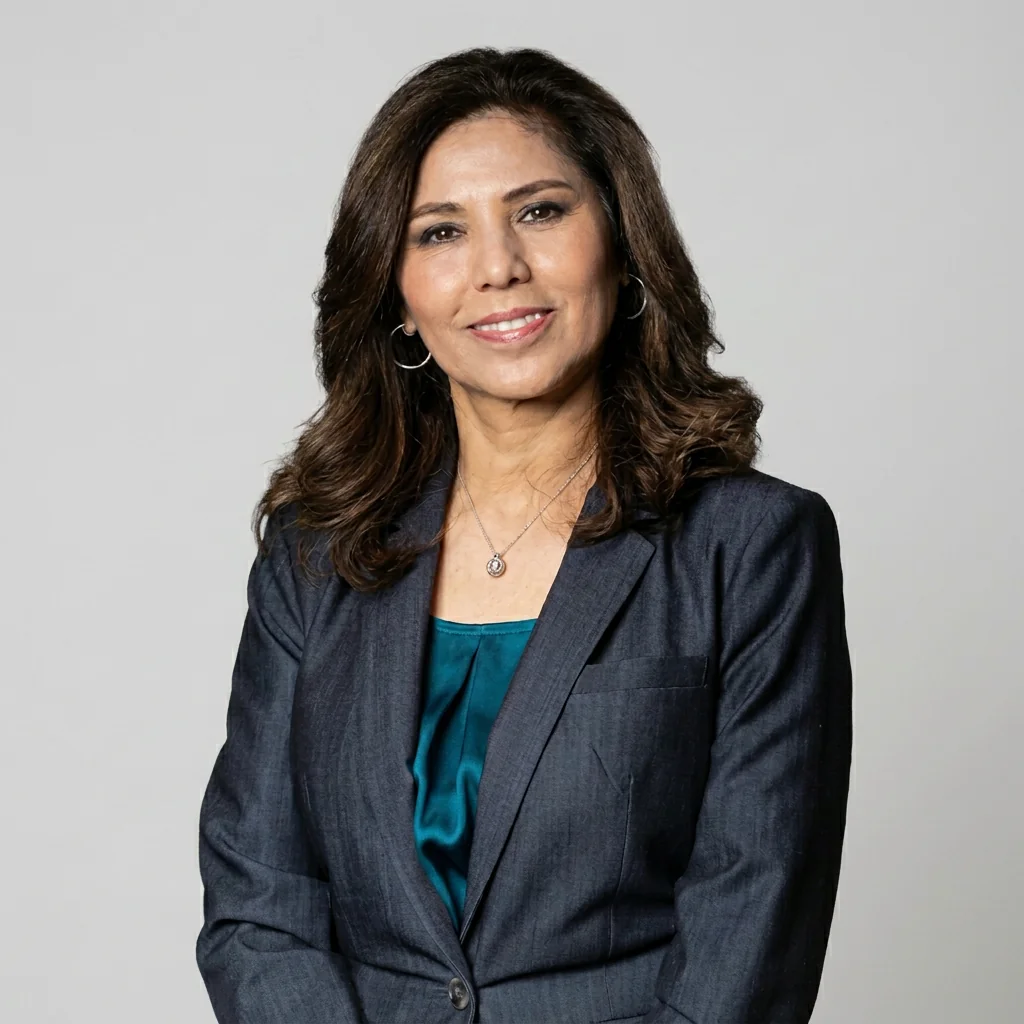
Jeanina Awni
Director of Legal Technology & Innovation at Al Mikial Law Firm, led the legal analysis of Saudi and UAE law, including Sections 1, 3 and 6.
She advises executives, investors and institutions on technology regulation, digital assets and emerging legal frameworks and their inheritance under Sharia succession frameworks; her published analyses of the Kingdom’s regulatory trajectory are cited in Section 3.
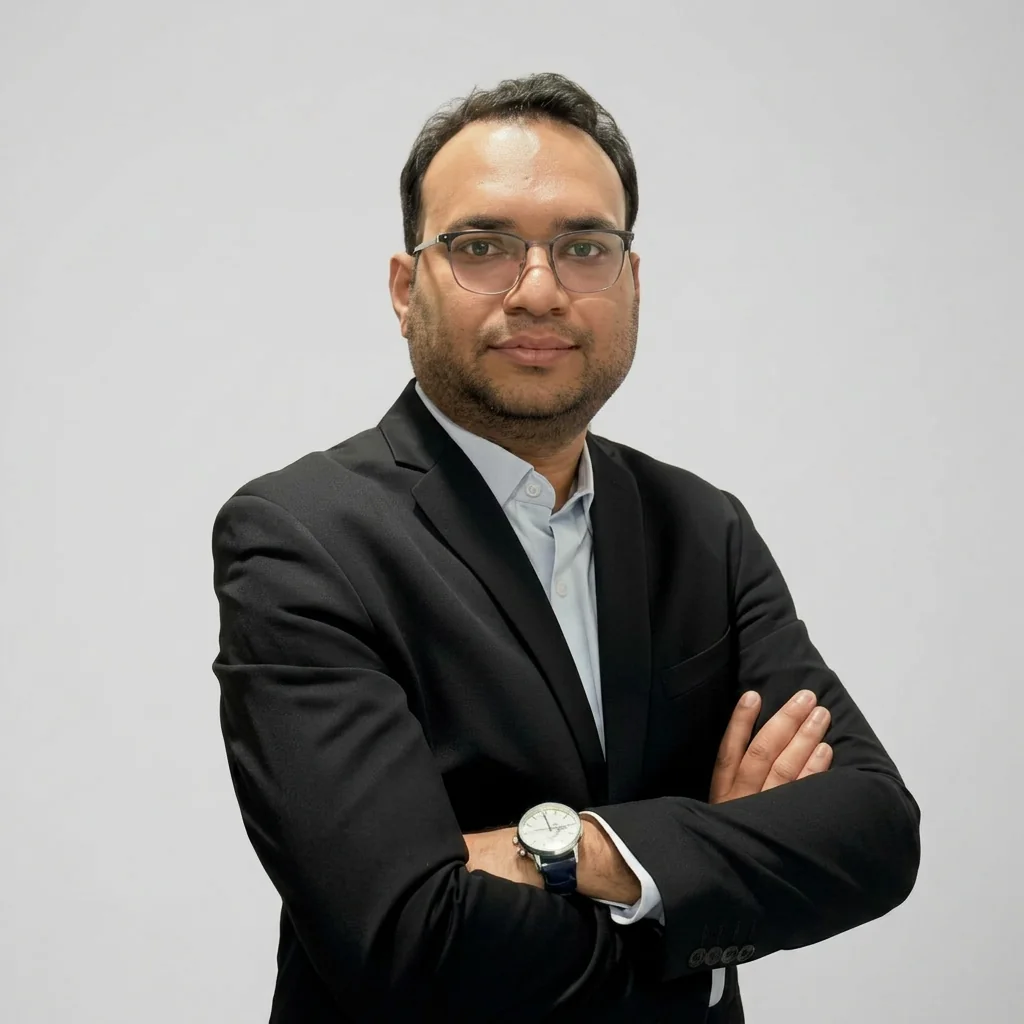
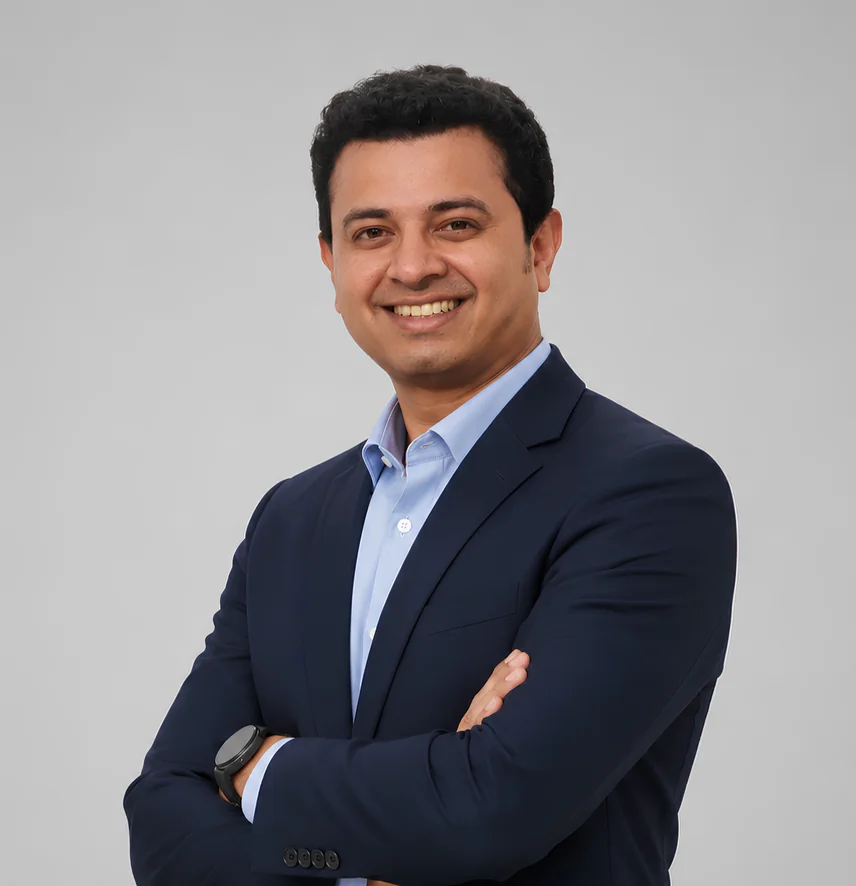
Deepak Saini and Ishan Shukla co-lead BlockWill Analytical Technologies Limited, a DIFC-based innovation company in the legal-tech space whose technology team contributed Sections 2 and 4 and the technical elements of Section 5; the cryptographic architecture described at Sections 4.2-4.4 reflects, in generalized form, the standards-based approach used in its infrastructure. Sections 1 and 3 were led by Al Mikial Law Firm; Sections 5 and 6 and the Introduction are joint contributions. Each firm reviewed the whole.
This article is published for education and general awareness in the study of law and technology. It does not constitute legal advice, Sharia guidance, financial advice or an offer of services, and no reader should act on it without independent professional counsel. Statements of law are made as at July 2026 and legislation in this field changes quickly. Qur’anic and hadith references are provided for scholarly context; authoritative religious guidance should be sought from qualified scholars.
Notes and references
- 1Cerulli Associates, 'Cerulli Anticipates $124 Trillion in Wealth Will Transfer Through 2048' (press release, 5 December 2024), projecting USD 105 trillion to heirs and USD 18 trillion to charity. The 2022 edition of the same research had projected USD 84 trillion through 2045; the upward revision within two years is itself instructive.
- 2McKinsey & Company estimates, as reported in 'Middle East families set for $1 trillion wealth transfer by 2030', Khaleej Times (Dubai).
- 3Triple-A, Global Cryptocurrency Ownership Data (2024), estimating that approximately 25.3 per cent of the UAE population holds cryptoassets, the highest penetration recorded globally. See also Henley & Partners, Henley Crypto Adoption Index (2024) (ranking the UAE third worldwide) and (2025) (top five).
- 4Chainalysis, The Geography of Cryptocurrency: Middle East & North Africa (2025), recording more than USD 53 billion of on-chain value received by UAE addresses between July 2024 and June 2025, approximately 33 per cent year-on-year growth and the second-largest crypto economy in the region after Turkiye.
- 5Chainalysis, Middle East & North Africa Crypto Adoption Report (2024), identifying Saudi Arabia as the fastest-growing crypto economy in MENA at approximately 154 per cent year-on-year growth.
- 6Nathaniel Popper, 'Lost Passwords Lock Millionaires Out of Their Bitcoin Fortunes', The New York Times (12 January 2021), citing Chainalysis estimates that roughly 20 per cent of the then-existing 18.5 million bitcoin, worth some USD 140 billion at January 2021 prices, sat in lost or otherwise stranded wallets.
- 7Crypto.com, global market sizing research (2025), estimating approximately 741 million cryptoasset owners worldwide, up 12.4 per cent year-on-year.
- 8Satoshi Nakamoto, 'Bitcoin: A Peer-to-Peer Electronic Cash System' (white paper, 31 October 2008) 1, proposing 'an electronic payment system based on cryptographic proof instead of trust'.
- 9The Dubai Land Department launched a regulated real-estate tokenisation pilot in May 2025, followed by a licensed secondary market in February 2026. See Chambers and Partners, Blockchain & Crypto Assets 2026, UAE: Trends and Developments (2026).
- 10Jeanina Awni, 'Digital Twins: Legal Considerations for an Emerging Technology' (LinkedIn, 6 December 2023).
- 11Law Commission of England and Wales, Digital Assets: Final Report (Law Com No 412, 28 June 2023).
- 12Property (Digital Assets etc) Act 2025 (UK), s 1 (Royal Assent 2 December 2025): a thing 'is not prevented from being the object of personal property rights merely because it is neither (a) a thing in possession, nor (b) a thing in action'.
- 13DIFC Law No 2 of 2024 (Digital Assets Law) (in force 8 March 2024), arts 8-9. Article 9 declares a digital asset to be intangible property that is 'neither a thing in possession nor a thing in action'.
- 14Gate Mena DMCC (formerly Huobi OTC DMCC) v Tabarak Investment Capital Ltd [2023] DIFC CA 002, in which the DIFC Court of Appeal confirmed that digital assets are objects of property under DIFC law, endorsing the 'third category' analysis developed in English case law.
- 15UNIDROIT, Principles on Digital Assets and Private Law (2023), Principle 6, defining 'control' (the exclusive ability to prevent others from obtaining the benefit of the asset, to obtain that benefit oneself, and to transfer those abilities) as the functional equivalent of possession. Succession is expressly left to 'other law'.
- 16Civil Transactions Law, Royal Decree No M/191 of 29/11/1444H (18 June 2023), in force 16 December 2023, the Kingdom's first codified civil code. Articles 19-20 define objects of rights and mal (property) in deliberately capacious terms embracing material and immaterial things of value; the Law contains no express digital-asset provision.
- 17Adam Draper (Boost VC), interview with The Mercury News (November 2016).
- 18Chris Dixon, 'The next big thing will start out looking like a toy' (cdixon.org, 4 January 2010).
- 19Joseph F Rice, remarks at the TechInLaw LegalTech Seminar (as reported in the seminar's published spotlights).
- 20River Financial, 'How Much Bitcoin Is Gone Forever?' (research note, 2025), conservatively estimating approximately 1.57 million BTC permanently lost through self-custody failures alone (around 98 per cent of them before 2020), and over three million BTC on broader definitions that include failed exchanges.
- 21STEP and the Cloud Legal Project, Queen Mary University of London, Digital Assets: A Call to Action (2021), a survey of 507 practitioners: over 90 per cent expected client demand for digital-asset advice to increase; nearly a quarter had already encountered clients unable to access a deceased or incapacitated family member's digital assets; over 85 per cent wanted providers to offer better post-death access mechanisms.
- 22Popper (n 6).
- 23In October 2023 the security firm Unciphered announced, after some 200 trillion laboratory attempts against the same model of device, that it could crack the IronKey and offered to unlock Mr Thomas's drive; he declined, citing prior commitments to other recovery teams. See 'A Team of Hackers Says It Can Crack the IronKey Holding $235 Million in Bitcoin', WIRED (October 2023).
- 24Howells v Newport City Council (High Court of England and Wales, Chancery Division, 9 January 2025), HHJ Keyser KC, striking out the claim as having 'no realistic prospect of succeeding', the drive having become the council's property on deposit under the Control of Pollution Act 1974; the Court of Appeal refused the appeal in March 2025.
- 25Ontario Securities Commission, QuadrigaCX: A Review by Staff of the Ontario Securities Commission (11 June 2020). The OSC found that the platform, which owed approximately CAD 215 million to more than 76,000 clients when it collapsed after Gerald Cotten's death in December 2018, had in substance operated as a fraud, its supposedly inaccessible cold wallets having been emptied months earlier: 'an old-fashioned fraud wrapped in modern technology'.
- 26See the investigative account in The Daily Dot, 'What happens to your cryptocurrency when you die?' (2019). Peak-period press figures of USD 500 million and above were later tempered by estate filings reportedly nearer USD 193-200 million, and by indications that portions of the XRP were held under contractual lock-ups; the episode is best read as a parable of secrecy rather than a precise accounting.
- 27Administration of Estates Act 1925 (England and Wales), s 25: the personal representative's duty to 'collect and get in' the estate, a duty that presupposes the estate can be found.
- 28DIFC Electronic Transactions Law, DIFC Law No 2 of 2017, art 8; ADGM Electronic Transactions Regulations 2021, s 25 (each excluding wills, codicils and testamentary trusts from electronic-form validity). By contrast, UAE Federal Decree-Law No 46 of 2021 on Electronic Transactions and Trust Services contains no equivalent exclusion list; onshore testamentary formality flows instead from personal-status procedure and registration practice.
- 29Trust & Will, 2024 Probate Study (reporting an average duration of approximately 20 months for US probate administration); simpler estates commonly take 9 to 18 months. Grants of probate in England and istikhraj (succession-certificate) procedures in the Gulf exhibit comparable friction.
- 30Binance, 'How to Use the Inheritance Appeal Feature on Binance' (support documentation), requiring certified death certificates and proof of kinship or probate authority, with processing typically taking one to two months.
- 31Revised Uniform Fiduciary Access to Digital Assets Act (Uniform Law Commission, 2015), enacted in the overwhelming majority of US states (46 and the District of Columbia as at late 2023). Its three-tier hierarchy (provider 'online tool' designations first, estate instruments second, terms of service last) is the most developed statutory answer to fiduciary access yet drafted.
- 32Kingdom of Saudi Arabia, Vision 2030 (April 2016).
- 33Ministry of Justice (KSA), Najiz portal, inheritance-certificate service with automated computation of heirs' shares; the Ministry's virtual notary processed over 1.4 million transactions in 2024.
- 34Statement of the Standing Committee for Awareness on Dealing in Unauthorized Securities Activities in the Foreign Exchange Market (2018) (whose members include the Saudi Central Bank and the Capital Market Authority), placing virtual-currency dealing outside the licensed perimeter; reiterated by a Ministry of Finance statement (August 2019). Dealing by licensed financial institutions is barred; individual holding has not been criminalised.
- 35Saudi Central Bank and Central Bank of the UAE, Project Aber: Saudi Central Bank and Central Bank of the UAE Joint Digital Currency and Distributed Ledger Project, Final Report (November 2020), concluding that distributed ledger technology was viable for cross-border interbank settlement.
- 36Saudi Press Agency, announcement of SAMA joining Project mBridge as a full participant at MVP stage (5 June 2024). The Bank for International Settlements later stepped back from the project, and by 2026 multilateral CBDC interoperability efforts had largely wound down; the institutional fluency SAMA acquired in distributed-ledger settlement remains the salient point.
- 37'Global crypto exchanges back Saudi Arabia's stablecoin, digital asset ambitions', Al Arabiya English (6 November 2025), reporting ministerial confirmation that riyal-pegged stablecoins under joint SAMA/CMA oversight were under design. No comprehensive virtual-asset statute had been enacted in the Kingdom as at mid-2026.
- 38Jeanina Awni, 'Is Saudi Arabia ever going to approve blockchain regulations?' (LinkedIn, 17 October 2023).
- 39Jeanina Awni, 'Saudi Arabia's Crypto Embrace: From Warnings to Sharia Compliance, A Shift in Perspective' (LinkedIn, January 2024).
- 40Basic Law of Governance, Royal Order No A/90 (1 March 1992), arts 1 and 7 (the Qur'an and the Sunnah as the Kingdom's constitution and the source of authority for all laws); arts 17-18 (property rights and their protection).
- 41Personal Status Law, Royal Decree No M/73 of 6/8/1443H (9 March 2022), in force June 2022, the Kingdom's first codified family-law statute, whose closing parts codify the estate (al-tarika, art 197 ff), wills and the fixed shares. Article 251 preserves the 'most preponderant opinions' of the Sharia as the residual source.
- 42Personal Status Law, Royal Decree No M/73 of 6/8/1443H (9 March 2022), arts 197 ff and 251, as above.
- 43Civil Transactions Law, Royal Decree No M/191 dated 29 Shawwal 1444H (18 June 2023), particularly arts 1, 41-43 and the general provisions recognizing proprietary rights and transferable property interests.
- 44Law of Evidence, Royal Decree No M/43 dated 26 Jumada al-Awwal 1443H (30 December 2021), Chapter Seven (Digital Evidence), particularly arts 53-64.
- 45Personal Data Protection Law, Royal Decree No M/19 dated 9 Safar 1443H (16 September 2021), as amended by Royal Decree No M/148 dated 5 Ramadan 1444H (27 March 2023), particularly the provisions governing international transfers of personal data.
- 46Saudi Central Bank (SAMA), Electronic Services Portal (providing electronic services relating to banking relationships of deceased persons and other regulated financial services), available at https://www.sama.gov.sa (last visited 20 July 2026).
- 47Narrated of Sa'd ibn Abi Waqqas: Sahih al-Bukhari 2742; Sahih Muslim 1628. The Prophet (peace be upon him) limited Sa'd's intended bequest to 'one-third, and one-third is much', adding that it is better to leave one's heirs rich than to leave them destitute and begging.
- 48Sunan Abi Dawud 2870; Jami' al-Tirmidhi 2120: 'Allah has given each entitled person his right, so there is no bequest to an heir' (la wasiyya li-warith). The majority Sunni position permits such a bequest only with the other heirs' consent given after the testator's death, the position now codified in the Saudi Personal Status Law (n 41).
- 49Qur'an 4:11, 4:12 and 4:176.
- 50On 'awl (proportional abatement where fixed shares exceed the estate) and radd (return of the surplus to the sharers where they undershoot it and no residuary exists), see Muhammad Jawad Mughniyyah, The Five Schools of Islamic Law (chapters on al-'awl and al-radd).
- 51On hiba (lifetime gift) and its delivery (qabd) requirement, see the standard fiqh treatments and, in the Saudi planning context, International Bar Association, International Estate Planning Guide, Saudi Arabia (2024).
- 52UAE: Federal Law No 5 of 2018 on waqf (charitable and family endowments). In the Kingdom, the sector is supervised by the General Authority of Awqaf.
- 53On takharuj, the negotiated withdrawal of an heir from the estate for agreed consideration, rooted in early practice and recognised across the schools, see e.g. 'Flexibility of the Takharuj Principle in Solving Inheritance Issues' (2017) (scholarly analysis).
- 54Dar al-Ifta al-Misriyyah, fatwa of Grand Mufti Shawki Allam (December 2017), holding dealing in bitcoin impermissible on grounds including excessive uncertainty (gharar), volatility akin to gambling, the absence of state guarantee and criminal misuse.
- 55Directorate of Religious Affairs (Diyanet, Turkiye), statement of 28 November 2017 (the purchase and sale of virtual currencies 'not compatible with religion at this time' owing to speculation and the absence of state audit).
- 56Muhammad Abu-Bakar, Shariah Analysis of Bitcoin, Cryptocurrency, and Blockchain (Blossom Finance working paper, April 2018), concluding that bitcoin qualifies as mal and as customary money ('urf), and is permissible where not prohibited by local law.
- 57Shariyah Review Bureau (Bahrain), Sharia certification of the Stellar protocol for payments and asset tokenisation (2018), reasoning by analogy from AAOIFI standards.
- 58International Islamic Fiqh Academy (OIC), Resolution No 237 (8/24) (24th session, Dubai, 4-6 November 2019), declining a definitive ruling on cryptocurrencies and calling for further collective study. AAOIFI had issued no dedicated cryptocurrency standard as at mid-2026.
- 59Federal Decree-Law No 41 of 2024 on Personal Status (in force 15 April 2025), replacing Federal Law No 28 of 2005. Among its succession provisions: bequests between persons of different religions are expressly valid; failed bequests revert to the estate; and the concealment or misappropriation of estate assets attracts criminal penalties.
- 60Federal Decree-Law No 41 of 2022 on Civil Personal Status (applied from 1 February 2023), art 11 (testamentary freedom for non-Muslims; gender-equal intestacy; heirs of a foreigner may invoke the law of the deceased's home state). In Abu Dhabi, Law No 14 of 2021 provides the emirate-level regime.
- 61Civil Transactions Law, Federal Law No 5 of 1985, art 17 (as amended): inheritance is governed by the law of the deceased's nationality at death, with UAE law applying to wills of aliens disposing of real property in the State. The 1985 Code was abrogated by Federal Decree-Law No 25 of 2025 (in force 1 June 2026); practitioners should verify successor numbering when citing after that date.
- 62Federal Decree-Law No 25 of 2025 (Civil Transactions Law, in force 1 June 2026), providing inter alia that financial assets in the State belonging to a foreigner who dies without heirs devolve to a charitable endowment under the supervision of the competent authority.
- 63Federal Decree-Law No 35 of 2022 on Evidence in Civil and Commercial Transactions (in force 2 January 2023), arts 53-64: electronic documents and signatures carry the same evidentiary weight as their paper and wet-ink equivalents where origin and integrity can be verified.
- 64DIFC Amendment Law No 3 of 2024, extending the concept of 'property' under the Trust Law, the Foundations Law, the Law of Obligations and related DIFC statutes to digital assets as defined in the Digital Assets Law (n 13).
- 65DIFC Foundations Law, DIFC Law No 3 of 2018. A foundation's assets are its own, sitting outside the founder's personal estate and therefore outside probate.
- 66Dubai Law No 15 of 2017 Concerning Administration of Estates and Execution of Wills of Non-Muslims in the Emirate of Dubai.
- 67DIFC Courts, 'Digital Assets Will' (launched October 2024): a dedicated testamentary instrument for eligible non-Muslim testators over 21, currently supporting a closed list of six tokens (BTC, ETH, MATIC, USDC, USDT and HBAR) allocated through a DIFC Courts non-custodial wallet built on Hedera; support for NFTs is described as expected in future.
- 68Dubai Law No 2 of 2025 Concerning the Dubai International Financial Centre Courts (in force 14 March 2025), arts 31(5) and 32: the DIFC Courts' enforcement judge has jurisdiction to enforce DIFC-registered wills whether the assets sit inside or outside the Centre, and DIFC Courts orders are final and not subject to merits review by the Dubai Courts.
- 69Abu Dhabi Law No 4 of 2013 (establishing ADGM), read with the ADGM Application of English Law Regulations 2015 (importing English common law and equity); Financial Services Regulatory Authority, virtual-asset regulatory framework (2018), the region's first comprehensive regime.
- 70ADGM DLT Foundations Regulations 2023 (2 November 2023), the first bespoke foundations regime for distributed-ledger and token projects.
- 71The Abu Dhabi Judicial Department operates a fully electronic wills registry for non-Muslims, open to residents of any emirate; ADGM Courts provide associated notarial services.
- 72Dubai Law No 4 of 2022 Regulating Virtual Assets in the Emirate of Dubai (establishing VARA, with emirate-wide jurisdiction excluding the DIFC); VARA, Virtual Assets and Related Activities Regulations 2023 (7 February 2023), including the Custody Services Rulebook (client-asset segregation, wallet management and governance).
- 73Federal Decree-Law No 6 of 2025 Regarding the Central Bank, Regulation of Financial Institutions and Activities, and Insurance Business (in force 16 September 2025), expressly bringing virtual-asset payment services, stored value and DLT-based activity within the Central Bank's perimeter, with a transition period expiring 16 September 2026 and penalties of up to AED 1 billion for unlicensed activity.
- 74Central Bank of the UAE, Payment Token Services Regulation (Circular No 2/2024, effective July 2024): dirham payment tokens must be fully reserve-backed; algorithmic stablecoins and privacy tokens are excluded.
- 75Dubai Court of First Instance, Case No 1739 of 2024 (Labour), ordering an employer to pay salary arrears denominated partly in EcoWatt tokens in kind, a striking recognition of cryptoassets as deliverable value, albeit in an employment rather than a succession context.
- 76Regulation (EU) 2023/1114 on markets in crypto-assets (MiCA), fully applicable from 30 December 2024. MiCA governs issuance, custody and service provision; succession remains a matter for Member State national law.
- 77Lombard Odier, GCC Succession Planning Survey (2025), finding that only 18 per cent of Gulf family businesses have a comprehensive succession plan in place.
- 78Lawrence Lessig, Code and Other Laws of Cyberspace (Basic Books 1999); 'Code Is Law: On Liberty in Cyberspace', Harvard Magazine (January-February 2000).
- 79National Institute of Standards and Technology, Secure Hash Standard (SHS), FIPS PUB 180-4 (August 2015), specifying the SHA-2 family including SHA-256.
- 80Federal Decree-Law No 35 of 2022 on Evidence (n 63), arts 53-64.
- 81Law of Evidence (n 44), arts 55-62.
- 82NIST, Advanced Encryption Standard (AES), FIPS PUB 197 (November 2001, updated 2023). 'AES-256' denotes the standard operated with a 256-bit key.
- 83PDPL (n 45), art 29. On the free-zone regimes, see DIFC Law No 5 of 2020 (Data Protection) and the ADGM Data Protection Regulations 2021.
- 84NIST, The Keyed-Hash Message Authentication Code (HMAC), FIPS PUB 198-1 (July 2008); H Krawczyk, M Bellare and R Canetti, 'HMAC: Keyed-Hashing for Message Authentication' (RFC 2104, February 1997). 'HMAC-SHA-256' denotes HMAC instantiated with SHA-256.
- 85NIST, Security Requirements for Cryptographic Modules, FIPS PUB 140-3 (March 2019), the standard against which hardware security modules are validated.
- 86W3C, Web Authentication: An API for Accessing Public Key Credentials (Recommendation, March 2019), with the FIDO Alliance's CTAP specifications comprising the FIDO2 framework for phishing-resistant hardware-bound authentication.
- 87Adi Shamir, 'How to Share a Secret' (1979) 22(11) Communications of the ACM 612.
- 88DIFC Courts' Digital Assets Will, which operationalises lifetime allocation through a courts-integrated wallet, a delivery layer in judicial form.
- 89Primavera De Filippi and Aaron Wright, Blockchain and the Law: The Rule of Code (Harvard University Press 2018).
- 90Kevin Werbach, The Blockchain and the New Architecture of Trust (MIT Press 2018): users of a blockchain 'trust a system without necessarily trusting any of its components'.
- 91Thibault Schrepel, Blockchain + Antitrust: The Decentralization Formula (Edward Elgar 2021).
- 92OECD, Crypto-Asset Reporting Framework (2022); rules apply in early-adopting jurisdictions from 1 January 2026, with first exchanges of information scheduled from 2027.
- 93Saudi Central Bank (SAMA), Electronic Services Portal (electronic services relating to deceased customers' banking relationships and other regulated financial services), available at https://www.sama.gov.sa (last visited 20 July 2026).
- 94Erwin Chemerinsky, remarks on computational technology and access to justice (interview, Relativity).
- 95Remarks attributed to Glover, TechInLaw LegalTech Seminar (as reported in the seminar's published spotlights).